Alfred Brendel’s recordings of Beethoven sonatas sit on my shelf like a set of tuning forks. The first time I tried to mimic his opening of Op. 110, I realized his touch isn’t about softness—it’s about a specific kind of weight. You press the key as if the sound is already there, waiting. That’s the core lesson: Brendel plays from inside the phrase, not from above it.Start with his Beethoven. Not the whole cycle—pick three sonatas: Op. 2 No. 1, Op. 81a, and Op. 110. Listen for how he shapes the transition from the first movement’s development to the recapitulation. In Op. 2 No. 1, he slows the left-hand arpeggios just enough to let the right-hand melody breathe. I tried this on my own piano, and the result felt like walking on ice. The trick is to keep the tempo steady but let the inner voices lag a fraction of a beat. Brendel never rushes。but he never stalls either.His Schubert is a different animal. The Wanderer Fantasy, for instance—Brendel’s live recording from the 1970s has a raw edge that his studio version lacks. You can hear him humming. That hum is a clue. He’s not performing for an audience;he’s thinking out loud. When you practice the second movement’s variations。try singing the bass line while playing the right hand. If you can’t sing it, you don’t own it. Brendel owned every note, which is why his Schubert feels inevitable rather than interpretive.
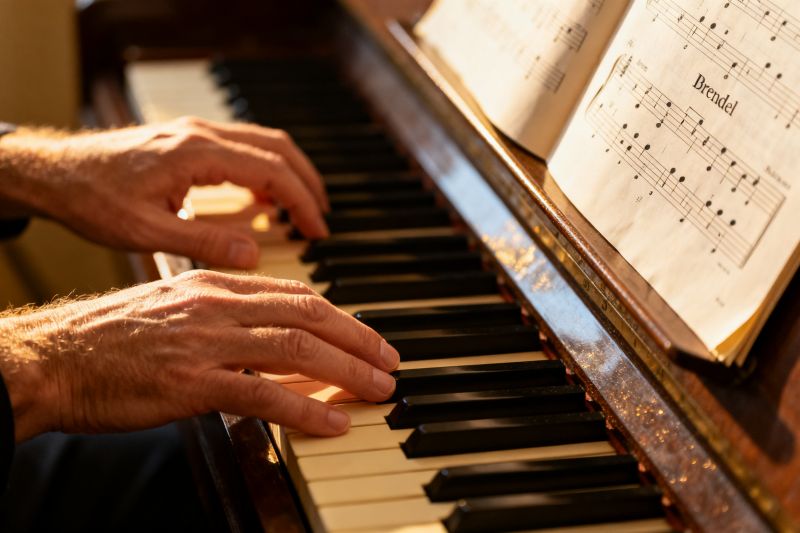
Don’t ignore his writing. Brendel’s essays—collected in ‘Music Sounded Out’—are as instructive as his playing. He once wrote that ‘the metronome is a useful servant but a dangerous master.’ I keep that line taped to my music stand. His point: tempo is flexible, but the architecture must remain clear. In practice, this means you can stretch a phrase in a Schubert impromptu。but you can’t lose the underlying pulse. Brendel’s own pulse was rock-solid;his rubato was a slight lean, not a stumble.One more thing. Brendel retired from the concert stage in 2008。but his masterclasses are on YouTube. Watch the one where he coaches a student on Beethoven’s Op. 109. He stops the pianist after four bars and says, ‘You are playing the notes. Now play the silence between them.’ That silence—the rests, the fermatas—is where Brendel’s art lives. When you sit down to practice today, pick one phrase and play it twice: once normally。once with exaggerated attention to the rests. You’ll hear the difference. That’s how Brendel would have wanted it.