he World Cup European Qualifying Play-offs are not a safety net. They are a meat grinder. Twelve teams, three spots, one shot. Since the format was introduced for the 1998 cycle, the play-offs have produced some of the most excruciating nights in European football: Portugal collapsing against Serbia in 2021, Italy losing to North Macedonia in 2022, and the Republic of Ireland ending a 16-year wait in 2001. The stakes are simple。the margin is razor-thin.The current structure, used for the 2022 and 2026 cycles, splits twelve teams into three paths of four. Each path runs two single-legged semi-finals and a final, all hosted by the highest-ranked team in the path. That hosting advantage is enormous. In the 2022 play-offs, all three eventual winners—Portugal, Poland, and Wales—played every match at home. The draw, seeded by Nations League performance, often decides more than form or talent. A team like Scotland in 2021, drawn away to Austria, knew the path was brutal before a ball was kicked. The single-leg format leaves no room for a bad night. Tactically。
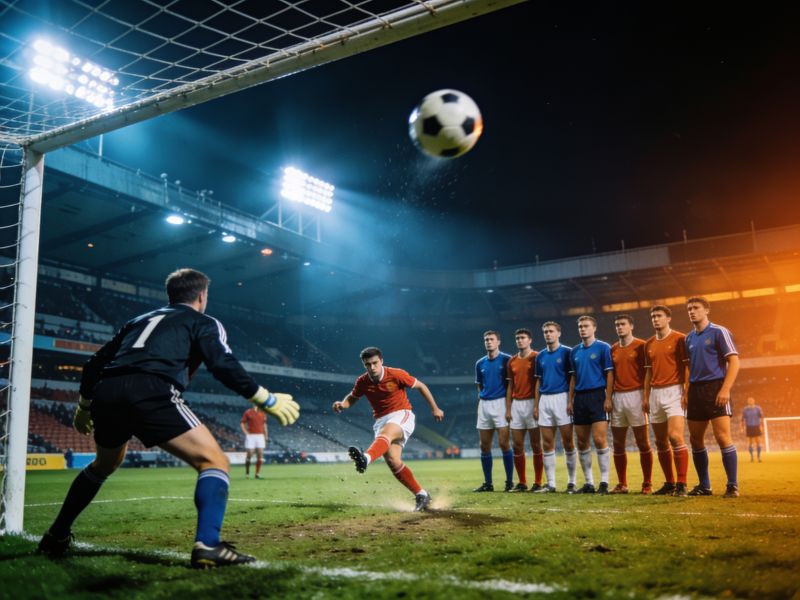
coaches approach these games like cup finals: low blocks, set-piece drills, and a heavy reliance on one or two match-winners. It is not beautiful football. It is survival.The Nations League backdoor has added a layer of complexity that many fans still misunderstand. Sixteen teams can theoretically reach the play-offs through their Nations League group performance, but only if they have not already qualified via the traditional group stage. This creates strange scenarios where a team ranked 40th in Europe secures a play-off spot over a higher-ranked side that finished third in a standard qualifying group. Critics call it a distortion of sporting merit. Defenders argue it gives smaller nations a tangible reward for competitive international windows. Either way, the play-offs now reward consistency across two separate competitions, not just a strong autumn.Which teams tend to thrive?Historically, the play-offs favour defensively organised sides with a clear identity and a goalkeeper capable of stealing a night. Italy’s 2022 failure was not a talent gap;it was a psychological collapse against a North Macedonia team that defended for 90 minutes and scored in the 92nd. Wales in 2022 relied on a single Gareth Bale free-kick to beat Ukraine. Portugal in 2022 needed two Bruno Fernandes goals to edge past Turkey and North Macedonia. The pattern is consistent: the team that handles the pressure and takes one chance advances. The team that expects to win by reputation goes home.March 2026 will bring the next edition, and the draw will inevitably produce a “group of death” path. My own view: the play-offs are the most honest form of World Cup qualification. No seeding can fully protect a big nation. No giant can coast. The format forces teams to confront their limitations in a single 90-minute window, often in hostile conditions, with a World Cup place on the line. It is unfair, chaotic。
and occasionally heartbreaking. It is also the purest test of nerve in the international game.